Graduation Requirements
Each year, students review their record and their progress toward graduation with several members of staff. Together they examine the student's strengths and weaknesses in order to plan an appropriate course and proficiency schedule leading to a graduation date.
Courses: A Breadth of Knowledge
Urban Academy believes an educated person is one who is able to reach informed judgments in a wide range of subjects. We also believe that a spread of courses will deepen the students' understanding of topics which already interest them as well as expose them to new ideas, issues, and information.

Proficiencies: Demonstrating Mastery
The proficiencies are projects — such as papers, exhibits, presentations and experiments — that allow students to demonstrate their ability to use the skills they have developed in their courses. Successful completion of these projects leads to an Urban Academy diploma and New York State diploma.
Proficiencies ensure that Urban Academy graduates are well educated, have successfully demonstrated aspects of what they know, and have achieved a depth of academic experience during their high school career. They require persistence as well as competence. The proficiencies build on students' successful participation in a wide range of courses and require work over an extended period of time, sometimes a year or more:

Relationship between Proficiencies and Courses
The skills developed in courses are cumulative, leading to the successful completion of proficiencies.
Science Example
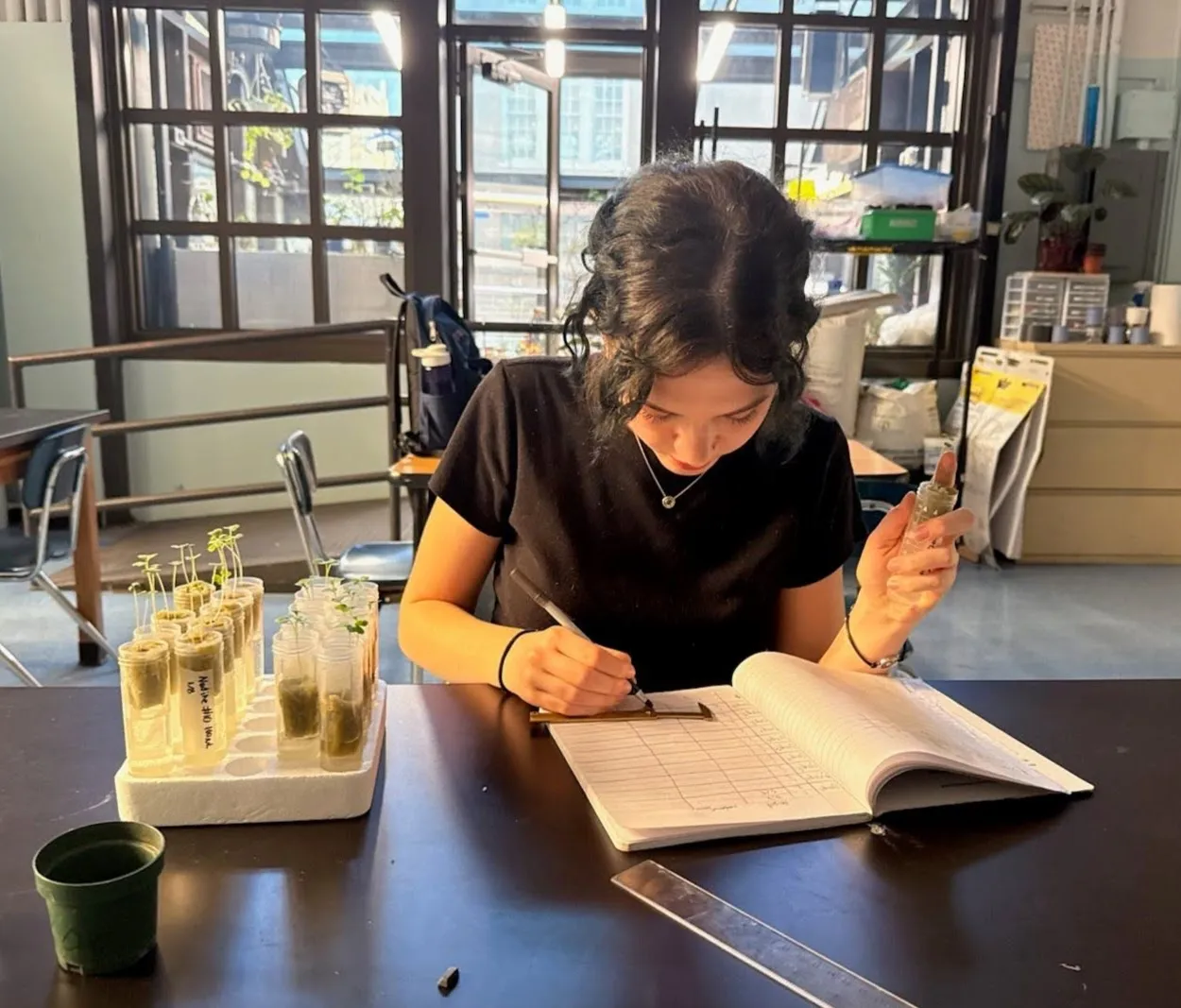
Students may take Horticulture, Physics: Mechanics, and Chemistry in different semesters. In each course, they will be expected to work on research design, do class readings, ask good questions, test hypotheses, write up observations and look into what others in the field have done. If they do the assignments, ultimately, they should reach a level that permits them to meet proficiency standards as part of their normal course work.
Arts Example
Students should find that courses such as Photography, Sculpture, Poetry, Painting, and Acting help to develop critical abilities and the ability to express ideas in forms other then analytic writing. Ultimately, as in other subject areas, students will find that the body of work they develop over time will meet proficiency standards.
Social Studies Example
In social studies courses such as Constitutional Law, Eyes on the Prize, History of Iran and Biographies, students will read primary and secondary sources, consider opposing viewpoints, weigh evidence, debate tough questions and write analytical papers. It is through this work every semester that they will develop the skills needed to complete their social studies proficiency project at a level that shows readiness to graduate.
In the areas mentioned above, as well as in other areas not covered, the courses students choose may not immediately satisfy a specific proficiency. Rather, the sum total of courses is designed to help develop academic skills and to prepare students for the proficiency projects.